
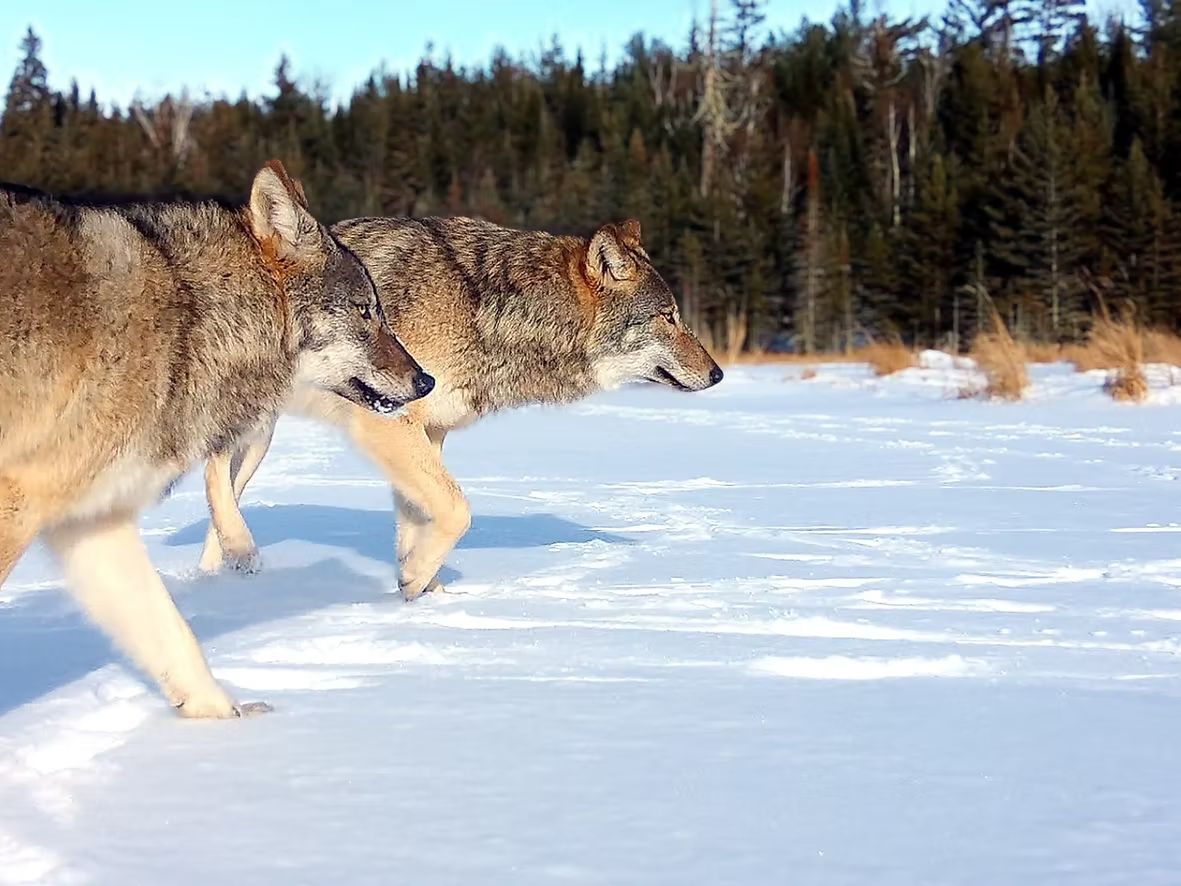
A “threatened” status means the species requires active conservation management to prevent it from reaching the more critical “endangered” status, while allowing for some management flexibility to coexist with human activities.
Action Alert: Call Your US Senator
The FWS first listed the gray wolf as endangered in 1967 under the Endangered Species Preservation Act (ESPA), a precursor to the ESA. Gray wolves have been delisted several times and then re-listed. In the Great Lakes states of Minnesota, Wisconsin, and Michigan, they are presently listed on the ESA as endangered, except in Minnesota, where they are listed as threatened. The latest delisting threat to Wisconsin’s wolves has made it through the House and is on its way to the Senate. The Pet and Livestock Protection Act bill requires the Secretary of the Interior to reissue the 2020 Department of the Interior final rule that delisted gray wolves in the lower 48 United States. It also ensures this rule cannot be overturned through judicial review.
Without judicial review, this would significantly limit any protections for Gray wolves in the case of wolf hunting. A case in point was Wisconsin’s February 2021. State-licensed hunters killed 218 wolves in less than three days, significantly exceeding the intended quota of 200, split with tribes. That sparked major controversy over state wolf management.

Wisconsin Bear Hunters
The bill to delist without judicial review is on the way to the Senate, and a solution would be to downgrade to threatened status, which would be a win-win for Gray wolves, farmers/livestock owners, and ethical hunters. A Congressional vote, legislation, can move wolves from endangered to threatened status.
Wolf Depredations on Livestock in Wisconsin.
Wisconsin’s 2025 wolf depredation reports show a significant rise in conflicts, with figures from late 2025 indicating around 62 livestock/pet incidents (45 killed, 17 harassed), nearly double three years prior, affecting many farms, especially in Northern/Central WI, highlighting financial impacts and farmer frustration over management. While these wolf depredations remain a hardship for individual farmers/livestock, it is important to examine the overall data on the number of livestock farms there are in the state.
While exact figures for Northern Wisconsin aren’t pinpointed in the provided data, Wisconsin has around 58,000 farms, with over 6,000 being dairy farms, holding 1.26 million cows. The state also has over 3.4 million cattle and calves total (including beef) and hosts thousands of beef farms, though specific regional breakdowns for farms and livestock numbers (dairy, beef, etc.) require county-level USDA data for Northern WI counties (like Dunn, Chippewa, Barron).
How to mitigate problems between Gray wolves and livestock farmers.
To non-lethally protect livestock from wolves in Wisconsin, use a layered approach with proactive tools like electric fencing with fladry, livestock guardian dogs (LGDs), hazing with lights/sounds, and removing attractants like carcasses, with wolf-proof fences offering the highest effectiveness by physically excluding wolves, often with help from USDA Wildlife Services, and Wisconsin DNR. These concerns are addressed in the WI DNR’s Wolf Management Plan, found on their website.
How to go from endangered to threatened status.
To go from Endangered to Threatened status under the U.S. Endangered Species Act (ESA), a species must show significant recovery, meaning threats are reduced, populations are increasing/stabilized, and its long-term survival is more secure, but still not fully secure, requiring a formal downlisting review by the U.S. Fish and Wildlife Service (USFWS), initiated by petitions or reviews, leading to a proposed rule in the Federal Register, public comment, and a final determination.
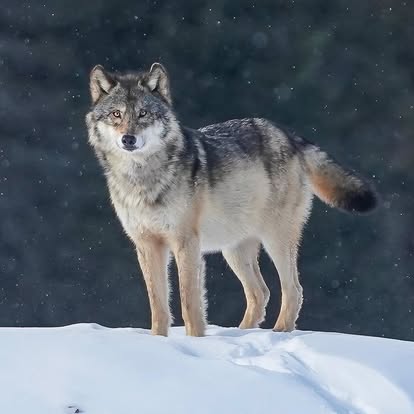
Wolves have made significant recovery since the late 1970s. In the year 2000, when I started as a Wisconsin Department of Natural Resources Winter Wolf volunteer tracker, there were only 66 wolf packs. Wisconsin’s wolf population estimate for the 2024-2025 overwintering period was approximately 1,226 wolves across 336 packs, a slight decrease from the previous year. Gray wolves mainly reside in the northern and central forests in the state.
Wolves’ habitat in the northern forests is generally good. The average wolf territory size is about 54 square miles in most of their range (Zones 1-4), while it is a more condensed 33 square miles in the central forest region (Zone 5).

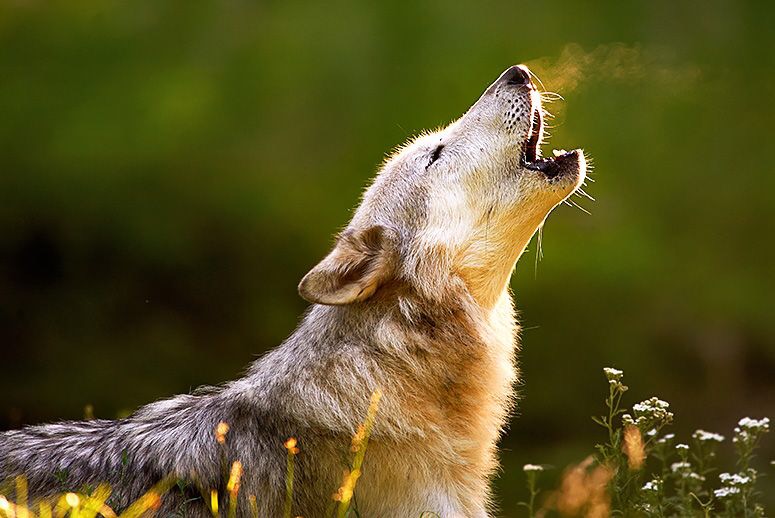
Key habitat areas often include dense forest cover, proximity to bogs or swamps, and access to prey such as white-tailed deer. Wolf packs use rendezvous sites, often grassy or sedge areas near wetlands at the forest edge, to raise pups until they are old enough to join the pack hunts.
Conflicts between Wisconsin bear hunters and wolves.
Despite Federal protections and management efforts, conflicts with livestock and hunting dogs continue to occur, primarily in the northern half of the state. The Wisconsin DNR partners with USDA-APHIS Wildlife Services to investigate all reported conflicts.
Hunters, primarily bear hunters, run into conflicts with Gray wolves while running their dogs through rendezvous sites. These conflicts are decades old, and despite WI DNR efforts to provide warnings, they continue unabated to this day.
The Wisconsin DNR provides interactive maps showing verified wolf attacks on hunting dogs, highlighting “caution areas”. These 4-mile buffers around attack sites can be found on the WI DNR’s website. Hunters should be extra careful, with specific data on recent kills/injuries and links to download map data for apps like OnX/Garmin, warning about the packs that often re-offend in the same areas, especially during bear/coyote training season. Hunters can find these maps at the DNR’s Gray Wolf Depredation page and the interactive map application.
Hunters are compensated for their loss of dogs for $2,500.00 per verified wolf depredation.
This decades-long conflict between bear hunters and wolves shows that Gray wolves, an endangered species, must show significant recovery, meaning threats are reduced, and in this case, have not been reduced. However, it does show that wolves should not be taken off the Endangered Species list altogether, as is being pushed by Representative Tom Tiffany’s Pet and Livestock Protection bill.
Watch the Oct 25, 2010 PBS Documentary on the conflict between bear hunters and wolves.
A case for wolves to remain protected under the ESA, whether it be an endangered species or a threatened species.
“The Pet and Livestock Protection Act bill requires the Secretary of the Interior to reissue the 2020 Department of the Interior final rule that delisted gray wolves in the lower 48 United States. It also ensures this rule cannot be overturned through judicial review, preventing activist judges, like the California judge who vacated the rule in 2022, from relisting the gray wolf by judicial fiat.” Senator Tom Tiffany
This bill is neither a win-win for wolves nor for people.
The U.S. House of Representatives voted on a bill to remove federal protections for wolves nationwide. It is now headed to the Senate, and I called my representative asking them to call for a downgrade to a threatened status instead of full removal without any judicial review.
Yes, a Congressional vote (via legislation) can move wolves from endangered to threatened (or delist them entirely), as seen recently with the U.S. House passing bills to remove gray wolf protections, but these actions require Senate approval and a Presidential signature to become law, allowing states to manage them, though court challenges often follow.
A threatened species is any plant, animal, or fungus vulnerable to extinction in the near future, facing high risk due to factors like habitat loss, poaching, climate change, or disease, with categories like Vulnerable, Endangered, and Critically Endangered used to define their risk level, notably by the IUCN Red List, with protections often enforced by national laws like the U.S. Endangered Species Act (ESA)
We all know how wolves have been treated when they get delisted! The most recent delisting by the Trump Administration in 2020 resulted in disasters for Wisconsin’s Gray wolves. Especially for our wolves here in Wisconsin.
The law, Act of 169, is in our state statutes, and requires a wolf hunt when they are not listed on the Endangered Species List. A compromise for removing them from the Endangered List would be to list them as Threatened.
Greater management flexibility is a win-win for wolves and people in a threatened status.
For species listed as threatened, the U.S. Fish and Wildlife Service (USFWS) can implement “special rules” under section 4(d) of the ESA. These rules often provide greater management flexibility to states, tribes, and landowners to address specific conflicts, such as wolf depredation on livestock, which can help increase human tolerance for wolves.
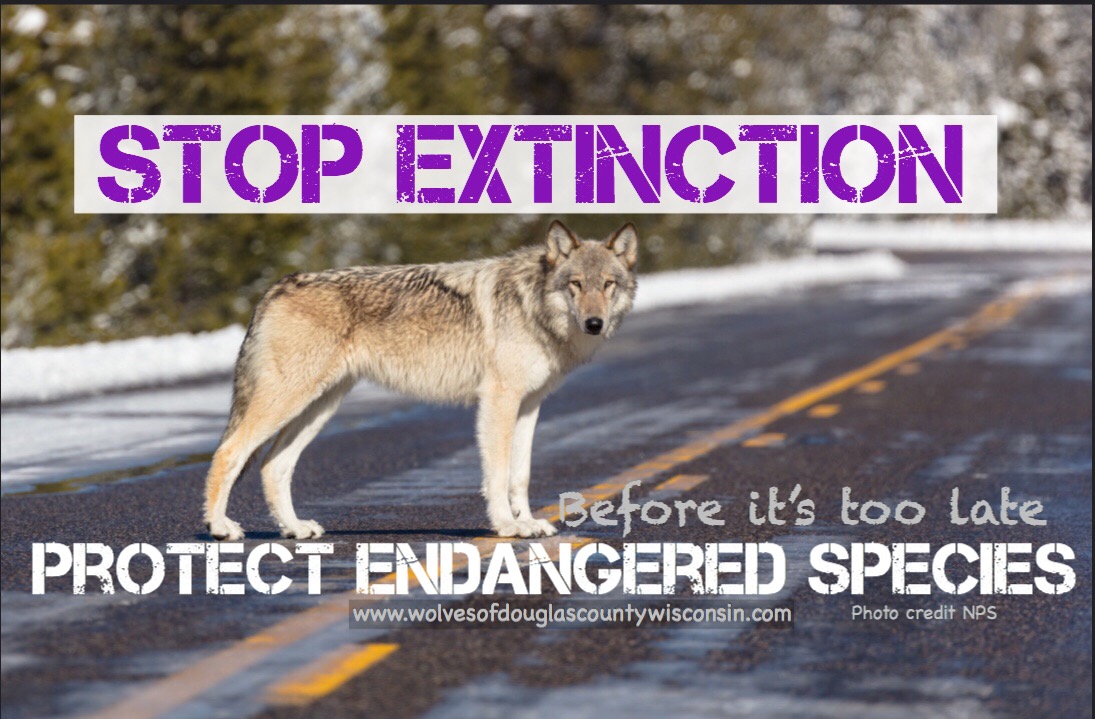
Currently, gray wolves in the contiguous 48 states are listed as endangered, except Minnesota, where they are listed as threatened, and in the Northern Rocky Mountains, where they are delisted and managed by the states and tribes.
In short, a “threatened” status means the species requires active conservation management to prevent it from reaching the more critical “endangered” status, while allowing for some management flexibility to coexist with human activities. Source USF&WS: Threatened Status
Take Action
Tiffany’s bill has to go through the US Senate next, and you can call your Senator and ask them to vote for a downgrade to threatened!
The following link will get you to contact information on your U.S. senators. Thank you!
https://www.senate.gov/senators/senators-contact.htm
Source links:
Wolves in Wisconsin https://dnr.wisconsin.gov/topic/WildlifeHabitat/wolf
Wisconsin Wolves, Wisconsin Department of Natural Resources
Resources
- Current information about dog depredations and caution areas.
- Interactive statewide depredation map.
- Guidance for hunters and pet owners.
- Wolves in Farm Country [PDF].
- Sharing the land with wolves [PDF].
Discover more from Wolves of Douglas County Wisconsin Film Company
Subscribe to get the latest posts sent to your email.







Leave a Reply