
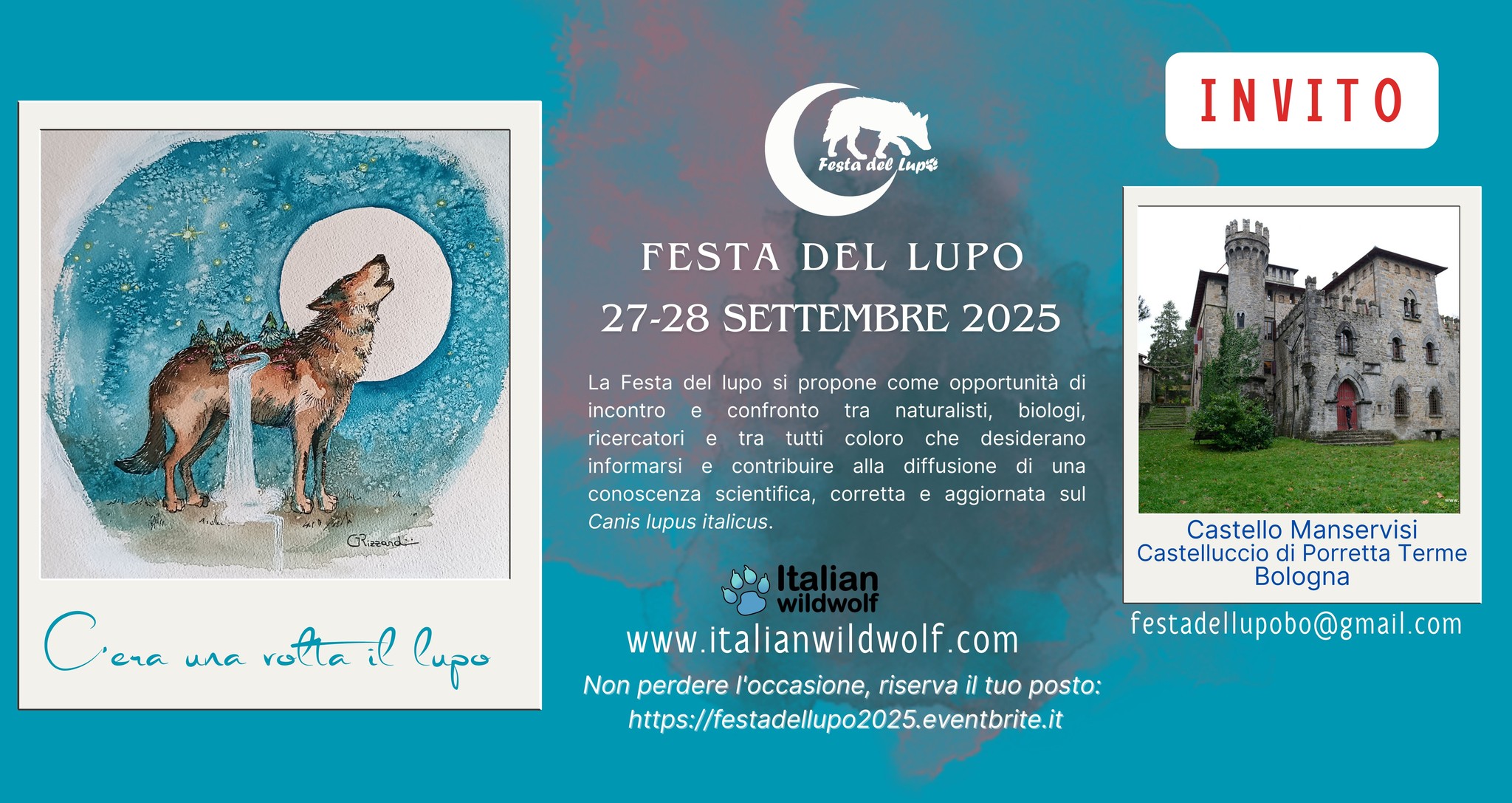
On Saturday, 27 September 2025, in Castello (Castle) Manservisi, Italy
The Wolf Festival, now in its eighth edition, is a unique opportunity to talk about Canis lupus italicus on the national territory: an animal as elusive as it is rare, to be protected and made known for what it actually is and represents.
Saturday 27 September will feature speeches by expert biologists and naturalists who have dedicated their lives and professions to studying its behavior and the implications that a probable extinction of this species, unique in the world and typical only of the Italian peninsula, could have a cascade effect on the entire natural habitat of our territory.
It will be possible to visit the largest photographic exhibition dedicated to the Italian wild wolf, which tells the story of the wolf’s life in its habitat, as well as an exhibition of paintings and books dedicated to the wolf. Without forgetting the little ones, to whom the educators of the Madreselva Cooperative will dedicate a workshop full of activities to have fun and learn.
And on Sunday (September 28), the expert guides of the Madreselva Cooperative organize an excursion on the trail of the wolf in the setting of the Tuscan-Emilian Apennines of Corno alle Scale. More information at Italianwildwolf.it
You can’t miss it!
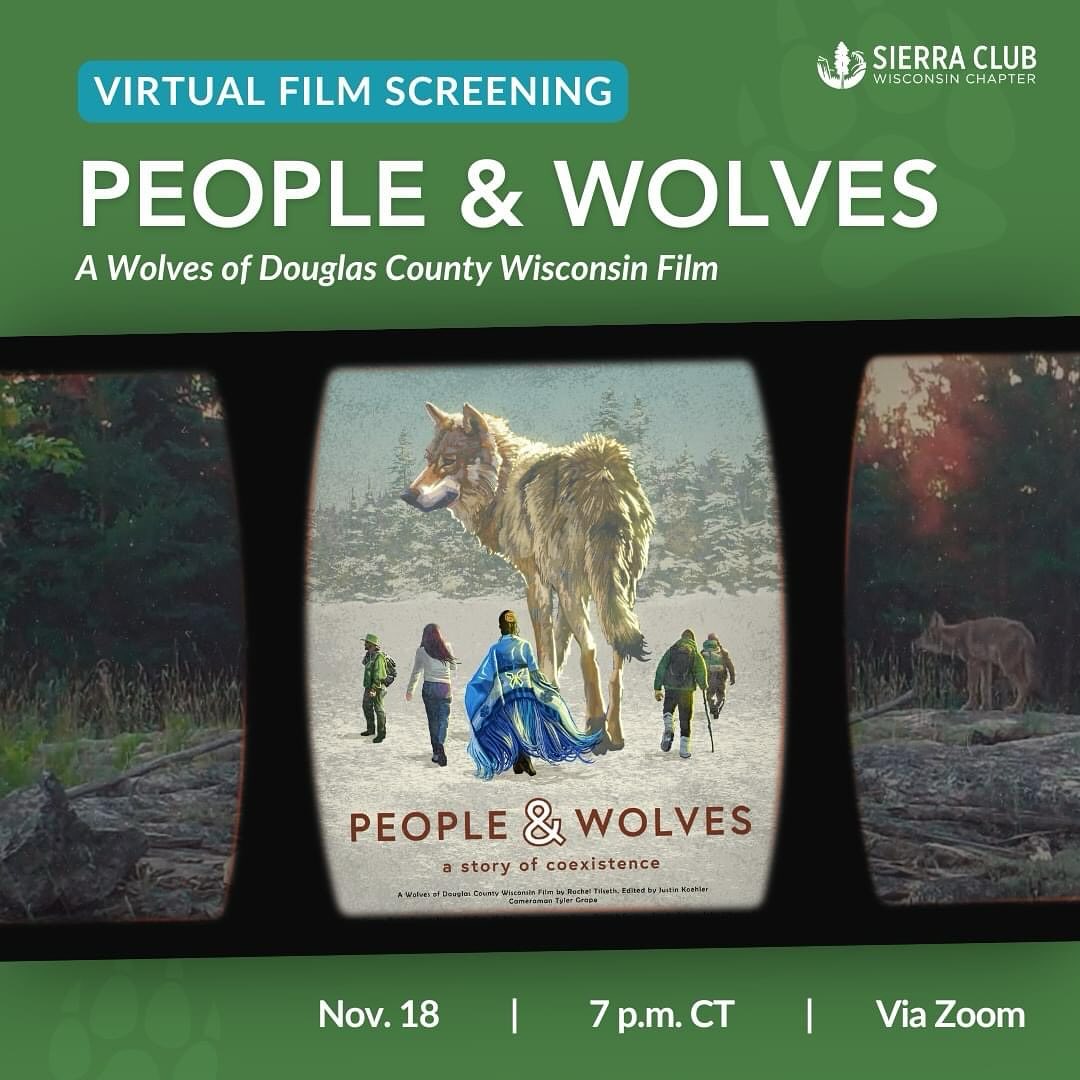
People & Wolves will screen at the festival!
About the film: People & Wolves: a story of coexistence
Short Synopsis:
For centuries, the Ojibwe have lived alongside their brother, Ma’iingan, who we know in English as the wolf. In February 2021, a brutal assault, a hunt on their wolf relative, stirs emotion and grief for Ma’iingan as they know what happens to him will happen to them.
A Wolves of Douglas County Wisconsin Film by Rachel Tilseth and edited by Justin Koehler.

Cast:
Cast: Edith Leoso, Peter David, Marvin DeFoe, Michael Waasegiizhig Price, Patrick Durkin, Sandy Gokee, John Johnson Sr., and Jane Goodall, DBE, founder of the Jane Goodall Institute and UN Messenger of Peace.
Director/Producer; Rachel Tilseth, Manish Bhatt; co-producer, Writer; Rachel Tilseth, and Tyler Grape; Cameraman.
Poster Design: Ned Gannon
Featured song ” Don’t Know Why, But They Do” Words & Music by Joe De Benedetti & Noah Hill.
Awards
Movie Play International Film Festival-Nominee
Royal Wolf Film Awards- Award Winner
Australia Independent Film Festival- Quarter-Finalist
Mindfield Film Festival • Albuquerque-Finalist
Critics’ Choice International Film Festival- Award Winner
Montreal Independent Film Festival- Award Winner
2024 ARFF Amsterdam // International Awards- Quarter-Finalist
Red Cedar Film Festival-Award Winner
36 Girona Film Festival Official Selection
Quotes from the film:
“What I learned most about making this film is that the Ojibwa People have lived alongside the wolf for centuries, coexisting with them, learning how to take care of their families from them. They haven’t just coexisted with them, they have a relationship with them whom they consider their brother. The Ojibwa and Ma’iingan (the wolf) exist together as one family.”
~Rachel Tilseth, Director/Producer of the Award-Winning Movie, People & Wolves
“So chronic wasting disease among the deer population in the south would proliferate. Right? And because nothing was taking them out, thinning out those herds that were suffering from that illness. I tell people C W D (Chronic Wasting Disease) is like the zombie apocalypse for the deer herd. That’s what it is. And it is Ma’iingan (the wolf) who helps them, helps those deer herds.” ~Edith Leoso, retired Cultural Officer for the Bad River Ojibwa Tribe
“I find that the only way to try and influence those determining the fate of animals is to sit down with decision makers and try to find a way to reach their hearts. This is best done by telling stories, although you may not know it at the time. A story may plant a seed that will slowly change the mind of the person. The less confrontational we can be, the more chance we have of success.”
~Jane Goodall, DBE, founder of the Jane Goodall Institute and UN Messenger of Peace.
“What I’m talking about, where it is written in universal law, that’s where it is written. It’s written in universal law that says, that gives us specific instructions on how to gather medicine, how to take care of the earth. How is the water behind me take care of that. That’s universal law. So what I’m saying is when you hunt that maiingan, when you go and hunt that maiingan, you’re violating the universal law.”
~Marvin DeFoe, Elder, and member of the Ojibwa Red Cliff Tribe
“We had this rather brief and brutal wolf season in February of 2021 when about 20% of the state’s wolf population was killed in just three days. So, an example really of how easy it is to kill wolves. I think if folks experienced a 14% decline in their salary, they’d probably feel that that was a significant percentage. And certainly, if you have the Ojibwe view that this is literally a 14% decline in your relatives, it holds a lot of meaning in a lot of significance.”
~Peter David, Wildlife Biologist
“What I would love to see is respect for the wolf, and the wolf is a part of our ecology and our environment. I would like to see the wolf be recognized as a contributor to a healthy ecosystem. So our scientists at GLI and other scientists, too as well, we’re beginning to realize that the wolves provide an ecological service to the deer population.”
~Michael Waasegiizhig Price, Indigenous Specialist at Great Lakes Indian Fish & Wildlife Commission.
“I think when you force something well, you might get some unintended consequences and make people make decisions without really thinking things through, which I think I’ll argue throughout my life that that’s what happened in February of 2021, with this hastily arranged Wolf season (hunt), we had late in this time window. We had to hold a wolf season, and by rushing it through because we had to meet the statutory requirement, we ran into real severe problems that blackened the eyes of Wisconsin’s hunters.”
Patrick Durkin, an award-winning outdoor writer, newspaper columnist, and general outdoors reporter.
MEET THE PEOPLE
Cast and Crew Bio
Edith Leoso is a Bad River Tribal member, retired from working as the Bad River Tribal Historic Preservation Officer (THPO) for the past 18 years. She is a discussant and presenter on a local, regional, national, and international level on a variety of issues related to Bad River Tribal History, inherent practices (culture), Traditional Ecological Knowledge (TEK), Tribal perspectives of climate change, Tribal Historic Preservation, historical trauma, and the Native American Graves Protection and Repatriation Act (NAGPRA). She is also a published co-author of Waking from Paralysis: Revitalizing Conceptions of Climate Knowledge and Justice for More Effective Climate Action; Marion Suiseeya KR, O’Connell MG, Leoso E, et al. The ANNALS of the American Academy of Political and Social Science. 2022; 700(1):166-182. Also, in the process of being published as co-author for Ganawendan Ginibiminaan: Mobilizing with the Bad River Ojibwe Community for Watersheds-At-Risk; Conaway D, Leoso E. Ecology and Society; 2023.
Marvin DeFoe is a contributing author of the Ma’iingan Relationship Plan and a member of the Red Cliff Band of Lake Superior Chippewa. He is an educator, teacher, birch bark canoe builder, and Red Cliff elder. He grew up in the Red Cliff community and is part of the Sturgeon clan. He is named Shingway Banase in Anishinaabe and is passionate about maintaining and revitalizing the Ojibwe language. Marvin is the past Vice Chair of the tribal council and has been the Tribal Historic Preservation Officer for four years.
Peter David is a retired wildlife biologist with the Great Lakes Indian Fish and Wildlife Commission, where he assists GLIFWC’s member tribes in implementing their off-reservation, treaty-reserved rights. He received his education (bachelor’s and master’s in Wildlife Ecology) from UW-Madison and from the tribal elders and members for whom he has worked for the last 35 years. At the Commission, he has had the opportunity to steward resources as varied as wild rice and wolves.
Patrick Durkin of Eau Claire, Wisconsin, is an award-winning outdoor writer, newspaper columnist, and general outdoors reporter. He has been MeatEater’s wildlife research contributor since June 2018 and frequently writes for national archery and hunting magazines. Durkin also provides editing services for books and magazines and was a contributing editor/writer for the Archery Trade Association from September 2001 through January 2021.
Dr. Jane Goodall, DBE, founder of the Jane Goodall Institute & UN Messenger of Peace.
When Jane Goodall entered the forest of Gombe, the world knew very little about chimpanzees, and even less about their unique genetic kinship to humans. She took an unorthodox approach in her field research, immersing herself in their habitat and their lives to experience their complex society as a neighbor rather than a distant observer and coming to understand them not only as a species but also as individuals with emotions and long-term bonds. Dr. Jane Goodall’s discovery in 1960 that chimpanzees make and use tools is considered one of the greatest achievements of twentieth-century scholarship. Her field research at Gombe transformed our understanding of chimpanzees and redefined the relationship between humans and animals in ways that continue to emanate around the world.
Michael Waasegiizhig Price is the Traditional Ecological Knowledge Specialist at the Great Lakes Indian Fish and Wildlife Commission in Odanah, WI. He is Anishinaabe, an enrolled member of Wikwemikong First Nations, Canada. His role as a TEK Specialist involves integrating the Anishinaabe language, cultural perspectives, and ceremonies into research methods and resource management to make science more culturally relevant. Michael received his Master of Science in Forestry from the University of Montana and a Bachelor of Arts in Biology from Benedictine College in Atchison, KS. He also received his Certificate of Ojibwe Language Instruction from Bemidji State University.
Sandy Gokee, an enrolled member of the Red Cliff Band of the Lake Superior Chippewa Indians.
John Johnson Sr. was the Chairman of the Lac Du Flambeau Band of the Lake Superior Chippewa Indians.
Rachel Tilseth – Producer & Director
Rachel Tilseth is an art educator, freelance writer, filmmaker, and retired DNR volunteer Winter Wolf Tracker. She has a Bachelor of Science Degree in Art Education in 1992 from UW-Stout, graduating with cum laude honors. She became a Wisconsin Department of Natural Resources Volunteer Winter Wolf/Carnivore Tracker in the year 2000 and, as a result, learned about the lives of wild gray wolves. As the film’s producer, Rachel brings her knowledge of Wisconsin’s wolves & the politics surrounding them. Rachel Tilseth’s documentarian work is a testament to her dedication to environmental and cultural education. Through her short films, she gives a voice to the Indigenous people and the majestic wolves they revere. Her craftsmanship is commendable, from the high technical standards of ‘People & Wolves’ to the heartfelt narrative of ‘More than a Wolf: Wolf 813’. Tilseth’s films are not just documentaries; they are emotional journeys that challenge viewers to empathize with the plight of both wolves and the Indigenous communities that cherish them. In an era where conservation is more critical than ever, Rachel Tilseth stands out as a passionate filmmaker with a strong, unwavering voice. Her ability to bring various perspectives together to advocate for wolves is admirable and inspiring. Her films are essential viewing for anyone who cares about the delicate balance between humans and nature. Through her exceptional work, Tilseth continues to educate, inspire, and move audiences worldwide. Review by https://shortfilmsmatter.com/spotlight/rachel-tilseth/
Manish Bhatt – Co-Producer
Manish Bhatt is a conservationist, writer, lawyer, and education leader. He holds a Bachelors of Arts magna cum laude from The George Washington University, a Juris Doctor magna cum laude from St. Thomas University School of Law, and a LL.M. from Georgetown University Law Center.
Having grown up in a rural New York Catskill Mountains community, Manish is committed to preserving wild spaces and wildlife. As an officer and Judge Advocate in the United States Coast Guard, Manish deployed in support of cleanup efforts following the Deepwater Horizon Oil Spill and led section 7 consultations with federal agency partners under the Endangered Species Act. He also worked closely with the Environmental Protection Agency and State Historic Preservation Officers to ensure compliance with marine environmental laws and regulations. Manish has served as a teacher and Head of School and believes in experiential and outdoor education. As a school leader, he worked closely with fundraising partners and grant providers to ensure student success and curricular development.
Manish is a feature and investigative writer for the Wolves of Douglas County Wisconsin Films. He brings deep curiosity and a commitment to objectivity to each article. As a lifelong learner, Manish seeks data and trend analysis in his reporting and interviews experts in wolf biology. Manish has co-hosted, alongside Rachel Tilselth, WORT Radio’s Access Hour to share wolf science and information with the listening audience.
MEET THE WOLVES
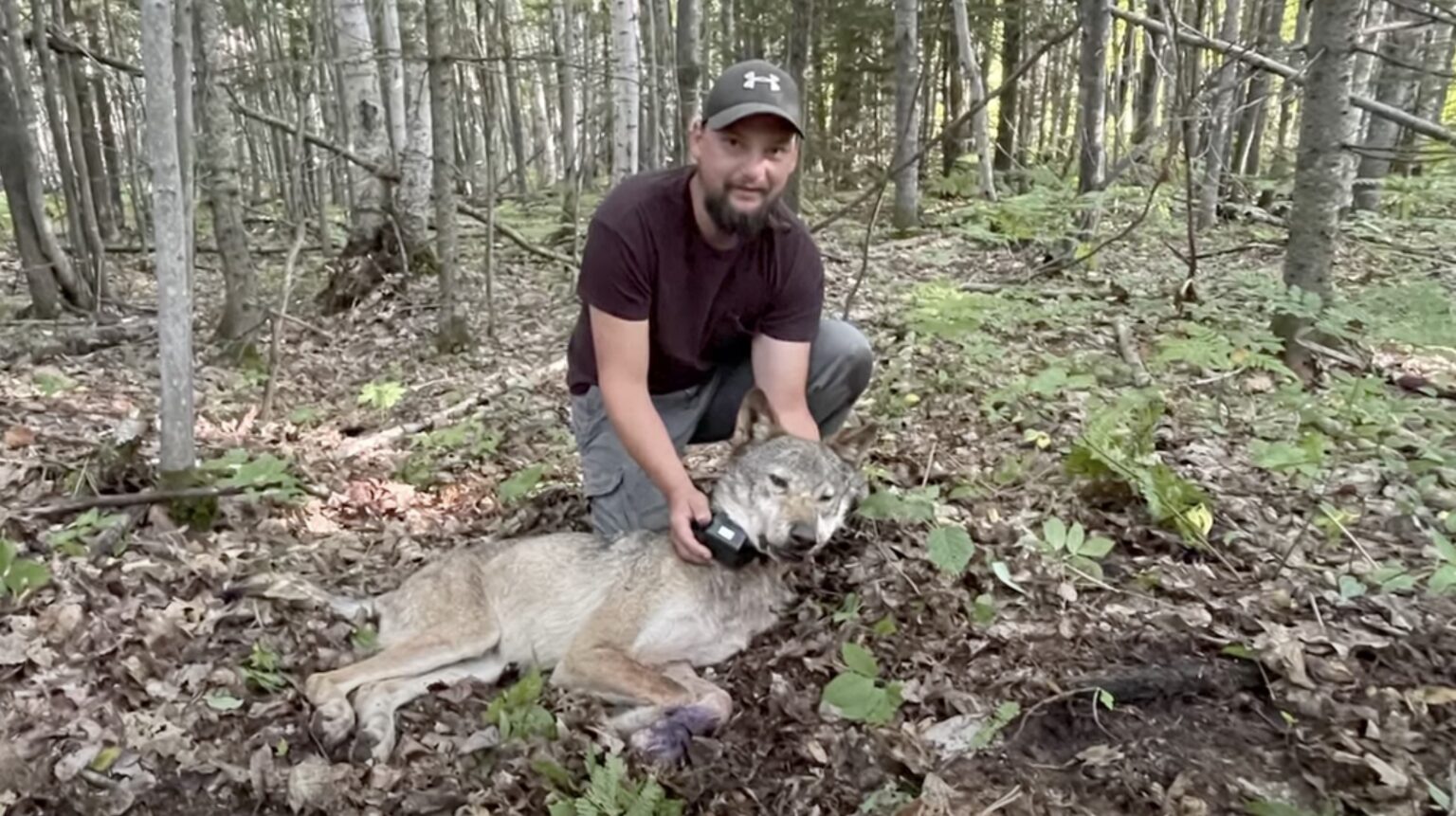
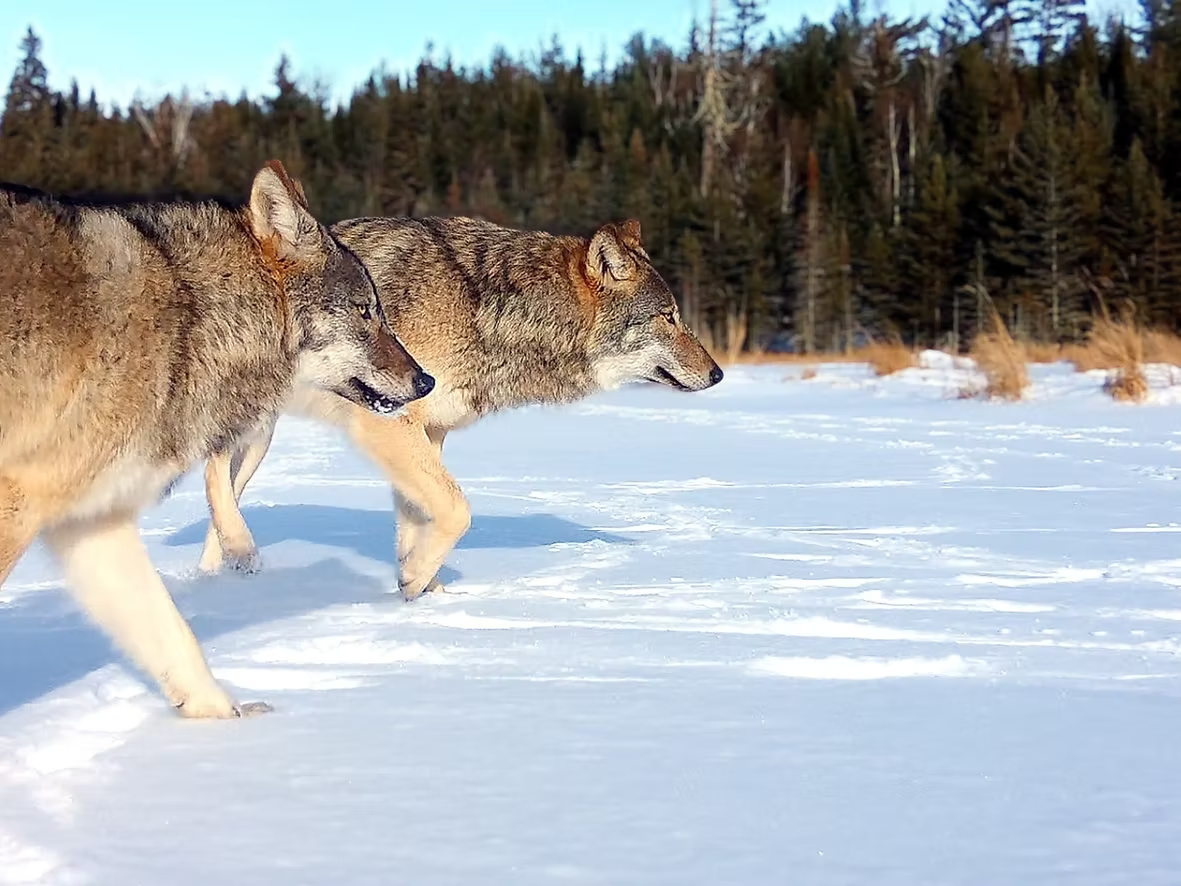
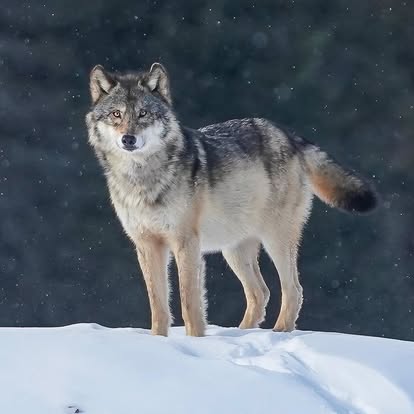
All wolf footage in the film courtesy of Voyageurs Wolf Project https://www.voyageurswolfproject.org/ The Voyageurs Wolf Project is a University of Minnesota research project that was started to address one of the biggest knowledge gaps in wolf ecology—what do wolves do during the summer? Our goal is to provide a comprehensive understanding of the summer ecology of wolves in the Greater Voyageurs Ecosystem in northern Minnesota.
Screenshot from the film Voyageurs Wolf Project Wolves

Discover more from Wolves of Douglas County Wisconsin Media
Subscribe to get the latest posts sent to your email.




Leave a Reply