
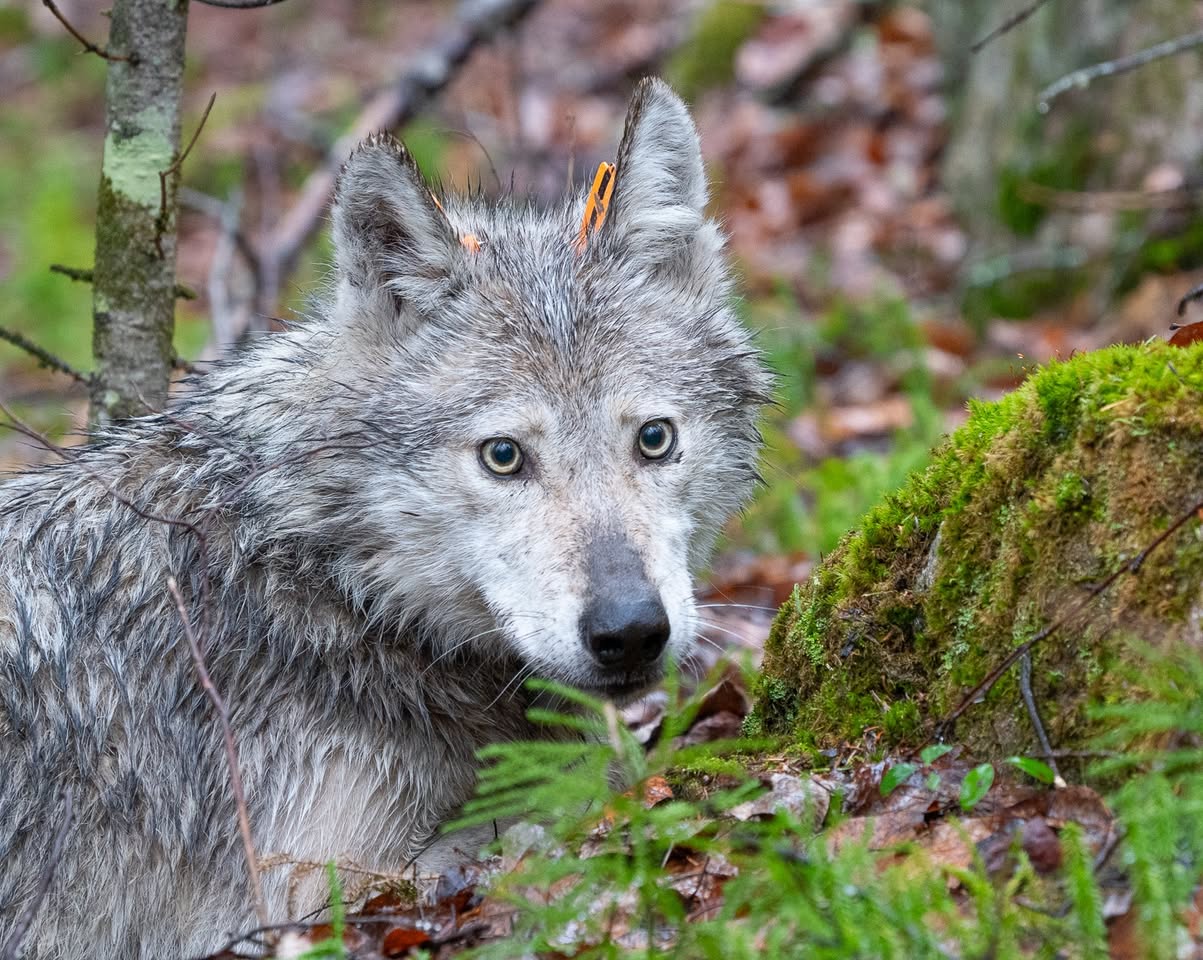
Voyageurs Wolf Project operating in Minnesota has proven that proactive solutions allow ranchers and farmers to have peace of mind knowing they don’t have to worry every night about whether their livestock will be killed by wolves.
There are approximately 1,000 Canis lupus, also known as the gray wolf or timber wolf, spread out in Wisconsin’s northern and central forests. A wild Gray wolf’s diet in Wisconsin includes deer, moose, and beaver. Wolves tend to be shy and elusive, avoiding people, but when you add in a farm or cattle ranch in thier territory, they could potentially prey on the cattle, sheep, other hoof stock, and poultry. Wolf depredations can occur when there have been no attempts by the farmer or the rancher to deter them. Sadly, once a wolf pack preys on these farms or ranches, then wildlife services have no choice but to lethally remove the entire family. Wolves are smart, and if given the opportunity of an easy meal, they will take advantage. This becomes a sad reality for wolves and the farmer’s loss of domestic stock. The losses of these domestic animals are compensated for once it is proven from wolves. Unfortunately, wolves suffer in the end as they are lethally removed because it becomes almost impossible to deter them.
“…wolves are highly intelligent, have a rich emotional life, and have feelings such as fear, anxiety, contentment, frustration, compassion, and so on. Wolves are intensely loyal to PAC members and are likely to grieve of the death or disappearance of a close companion.” Jane Goodall Interview from People & Wolves Documentary Short.
Yet there is evidence that nonlethal wolf deterrents can work Voyageurs Wolf Project (VWP) in Northern Minnesota has proven it can. A large ranch located within thier project went from multiple wolf depredations to zero due to implementing measures to deter wolves.
This 180-degree change is due to a collaborative effort between the rancher, Wildlife Services, and our project, where we (VWP) installed woven wire fencing around the ranch and added several Livestock Protection Dogs. This proactive, preventative, and non-lethal approach has clearly been effective. Source http://www.voyageurswolfproject.org
The following comes from a post on Voyageurs Wolf Project’s Facebook post. There were 136 verified depredations by wolves on livestock and pets in Minnesota last year, the most ever in the state. The bulk of those depredations occurred in spring, almost certainly because many wolves came out of the historically mild winter of 2023-2024 in poor body condition and were hungry.
In response to the depredations, 238 wolves were killed across the state with the intent of removing the problem individuals.
Despite these record levels of depredations, the large cattle ranch in the middle of the Greater Voyageurs Ecosystem, which has been plagued by wolf issues for over two decades, did not have a single depredation. No issues at all.
In fact, there was no evidence that any wolves stepped foot on this ranch, aside from one individual who slipped in briefly after flooding blew out a chunk of fence.
In fact, this large cattle ranch, perhaps the largest in northern Minnesota, is situated in the densest wolf population of not only Minnesota but in almost all of North America.
As such, this ranch had constant issues with wolves killing calves for years, and in response, up to 16 wolves were killed per year on the ranch. And yet, despite this, the problems continued with no end in sight.
However, this ranch has gone from a wolf haven to a wolf desert.
This 180-degree change is due to a collaborative effort between the rancher, Wildlife Services, and our project, where we installed woven wire fencing around the ranch and added several Livestock Protection Dogs. This proactive, preventative, and non-lethal approach has clearly been effective.

(Photograph from VWP’s Facebook page post) Checking out the solar-powered GPS-collar on Moose, one of the Livestock Guardian Dogs, with the rancher. Photo credit: Minnesota Star Tribune/Anthony Souffle.
If ever there was a year when this ranch should have had issues, it was last year when depredations were at record levels. But all was quiet. Indeed, last year was the first time in the past 20 years, per the recollection of the rancher, that he had not had issues with wolves.
Proactive, non-lethal solutions undoubtedly cost more up front, but they very likely pay for themselves in the long run, especially when large parts of the funding are covered by non-profits.
Most importantly, proactive solutions allow ranchers and farmers to have peace of mind knowing they don’t have to worry every night about whether their livestock will be killed by wolves.
Insofar as we can see it, such proactive solutions are a win-win.
https://www.facebook.com/share/p/1WFE77AU6g/
Minnesota and Wisconsin’s wolves are both protected under the Endangered Species Act, with the difference that Minnesota’s wolves have been downgraded to threatened status.
Following a federal court ruling on Feb. 10, 2022, gray wolves are listed as an endangered species in the lower 48 states (excluding the northern Rocky Mountains region). As such, wolves are federally protected. Wolf hunting and lethal depredation control are prohibited in Wisconsin. The Wisconsin DNR updated our state’s wolf management plan, and the final version of the Wisconsin Wolf Management Plan 2023 is available to view. Since the DNR manages wolves according to this plan and following state and federal laws. This plan works to protect people and wolves by using wolf education and nonlethal measures to mitigate problems between people and wolves.
In Minnesota, gray wolves are currently listed as a federally protected threatened species. They are no longer listed as endangered, but they still have federal protection under the Endangered Species Act. Minnesota’s wolf population is estimated to be around 2,919 wolves, with most residing in the northeastern part of the state. Being listed as a threatened species means wolves are at risk of becoming endangered in the foreseeable future throughout all or a significant portion of their range. The US Fish and Wildlife Service (USFWS) currently manages gray wolves under the Endangered Species Act (ESA) as a threatened species. This means wolves are protected under federal law, with Minnesota’s Department of Natural Resources (DNR) collaborating to manage the wolf population and minimize human-wolf conflicts. The DNR also works to inform the public and conduct research to inform management decisions. Source: https://www.mda.state.mn.us/business-dev-loans-grants/wolves-minnesota
Wisconsin Wolves
According to Wolf Depredation Reports in 2025, there were a total of four Confirmed and probable wolf depredations and four farms Verified wolf harassment or threats on Wisconsin farms. On a lighter note, there were 150 captive White-tailed deer harassed by gray wolves confirmed in Oneida County. Now, why would wolves harass deer?
Learn more at WI Wolves DNR: Nonleathal deterents can save the lives of wolves and domestic animals.The Wisconsin DNR partners with USDA-APHIS Wildlife Services to investigate reported conflicts with wolves. Their wolf conflict guidance page contains information on what to do if you suspect a wolf-involved conflict, an interactive map showing the locations of verified wolf conflicts, recent annual wolf depredation reports, and the annual wolf damage payment summary.
There are several wolf delisting bills being considered, and pay attention to the details in these because one component is to remove judicial review. In short, if that happens, it means states could hold wolf hunts, potentially like the disastrous one that was held in February 2021, and the courts would not be able to step in and relist wolves.
In the meantime, make sure farms and ranches in Wisconsin’s wolf country are implementing nonlethal wolf deterrents. Because they can work to save the lives of wolves and domestic animals.
Watch our films on YouTube
Discover more from Wolves of Douglas County Wisconsin Film Company
Subscribe to get the latest posts sent to your email.





Jim Low
Excellent piece, Rachel.
I did make it up to the CCC mtg in bayfield county to vote against the DNR fella that shot the wolf in his yard… Baiting or not???
Thanks for all you do for the wolves. Know tommy-t has a bill to huntem down again. jesus
Peace, jimlow, herbster